To Ensure Effective Chest Compressions During Cpr
CPR rate for all ages 100120 bpm. All healthcare providers should be following appropriate precautions and should have access to PPE in all clinical settings regardless of.

How To Do Cpr Call Push Shock
All of the above.

. Giving breaths during CPR can help infants. Ratio for CPR is 2 breaths. Which is the most effective CPR technique to perform until help arrives.
Two rescuers begin high- quality CPR while the third rescuer leaves to get the AED. However large randomised controlled trials of the routine use of mechanical devices in the out-of-hospital setting have found no evidence of improved patient outcome in. Patients with confirmed or suspected COVID-19 should receive the best resuscitative efforts possible.
Relaxation When possible change CPR operator every 2 min. If someone else can help switch off every two minutes while minimizing interruptions during compressions. The cycle of chest compressions and rescue breaths in CPR is.
In many adults who suffer a cardiac arrest the heart stops abruptly. Cardiac arrest survival is dependent on early initiation of CPR including chest compressions as soon as it is safely possible. The purpose of ventilation during CPR is to ensure sufficient oxygenation and adequate removal of carbon dioxide CO 2 while minimizing interruptions in chest compressions and not hyperventilatingtwo common problems that have prompted considerable research.
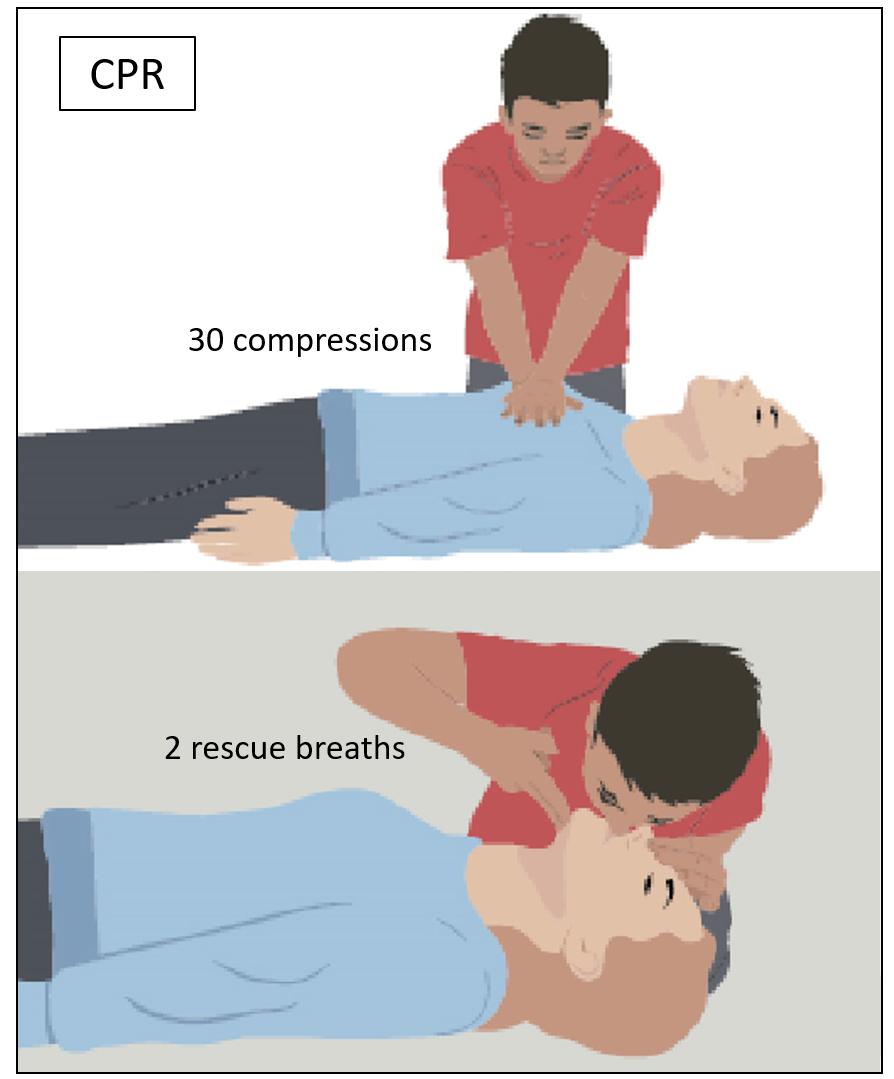
Ensure youre instructing others around to call for help and retrieve an AED while youre performing chest compressions and breaths. 30 compressions at 15 inches deep at rate of 100-120minute and deliver. While there is currently no specific data on COVID-19 transmission while performing CPR or giving first aid it is reasonable to conclude that chest compressions have the potential to generate respiratory droplets or aerosols and close contact needed for some aspects of first aid may have risk of.
Using the above scenario. Like children many cases of cardiac arrest in infants are primarily due to respiratory problems. Experts say people should wear a mask when performing CPR outside of medical settings too.
Standing to the side of the infant provide chest compressions using the 2 finger technique center of chest just below the nipple line on sternum. Want action supports 2-rescuer CPR. Mechanical CPR devices provide an automated way to deliver high-quality CPR.
Performing compressions correctly is essential to effective CPR and can be physically tiring. Delivering high-quality chest compressions minimizing interruptions and following a protocol for. The guidance recommends wearing a mask and other PPE during CPR.
General Guidance for Preventing COVID-19 Transmission During CPR and First Aid. After the two rescue breaths have been administered immediately resume chest compressions. Compressions continue at rate 100120 bpm and breaths at rate of 10 bpm.
Are delivered fast at a rate of 100 to 120 compressions per minute c. When you give care to an. All of the above.
Are smooth regular and given straight up and down d. You are alone caring for a 4 month old infant who has gone into cardiac arrest. This is a community course this is a not for healthcare providers.
Once patient intubated compressions and breaths are independent of each other. CPR or cardiopulmonary resuscitation is a live-saving procedure performed during emergencies. If on a bed place the cardiac compression board under the patient not.
This is a critical step. 11 When providing chest compressions to a newborn it may be reasonable to deliver 3 compressions before or after each inflation. Repeat the cycle of 30 chest compressions and two rescue breaths and use the AEDDefibrillator as soon as it is available.
Cardiac arrest survival is dependent on early initiation of CPR including chest compressions as soon as it is safely possible. Place the child on a firm surface. CPR procedure consists of two components including chest.
For children and infants if there are two rescuers performing CPR the ratio of compressions to ventilations changes to 152. Chest compressions are a rare event in full-term newborns approximately 01 but are provided more frequently to preterm newborns. 15 chest compressions to 1 rescue breath.
This type of CPR can give the body more. Also called CPR with breaths this alternates chest compressions with mouth-to-mouth breaths. Compression-only CPR describes the performance of uninterrupted chest compressions without rescue breathing.
2 rescuers alternate giving high quality chest compressions. Depth and ratio of chest compressions Knowing the depth and ratio of chest compressions to breaths is essential. This course is designed to prepare you to provide first aid CPR and use an automated external defibrillator AED in a safe timely and effective mannerThis course is designed to meet OSHA requirements and covers first aid basics and CPR and AED skills for adults children and infants.
Alternating the compressor role every two minutes Members of the. Patients with confirmed or suspected COVID-19 should receive the. Breathing will have been normal or nearly normal so the blood should be well oxygenated.
The interim guidance was. CPR is an effective procedure that can be implemented until professional medical assistance is available. Allow the chest to return to its normal position b.
Providing 30 inflations and 90 compressions per minute 31 ratio for 120 total events per minute. However delivery of effective chest compressions is often inconsistent subject to fatigue and practically challenging. In this situation compression-only CPR may be effective for the first few minutes after the heart stops.
The American Heart Association AHA has updated its cardiopulmonary resuscitation CPR guidelines to protect healthcare providers during the COVID-19 pandemic. The technique is especially designed to keep the blood circulation flowing when a victim is in cardiac arrest. How can rescuers ensure that they are providing effective breaths when using a bag-mask device.
Our online courses will refresh your memory and give you a review of. CHEST COMPRESSIONS Place the heel of one hand in the centre of the chest Place other hand on top Interlock fingers Compress the chest Rate 100 min-1 Depth 4-5 cm 15 to 2 inch Equal compression.

European Resuscitation Council Guidelines For Resuscitation 2015 Resuscitation
Cpr Basics For First Aid And Revival
First Aid Update Clinic Ppt Video Online Download
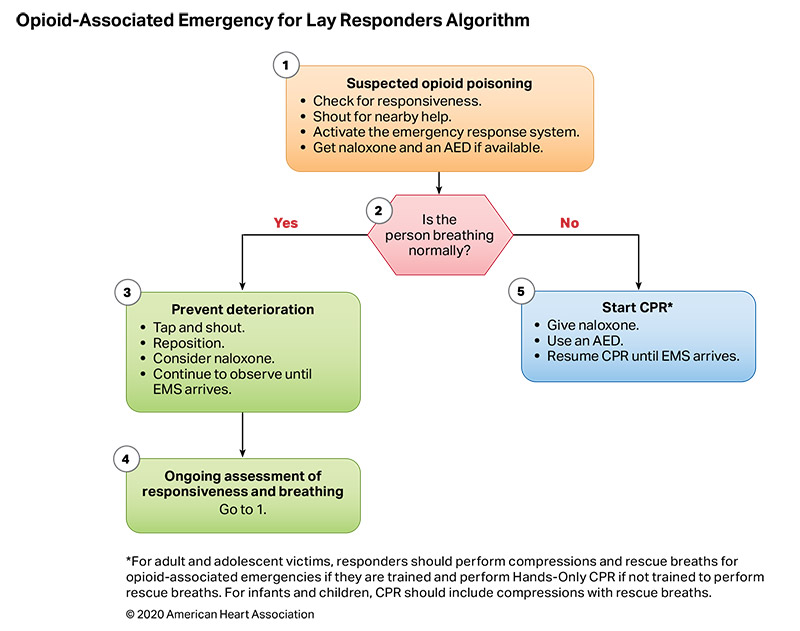
Part 3 Adult Basic And Advanced Life Support American Heart Association Cpr First Aid

Key Recommendations From The Aha Cpr Quality Consensus Statement Jems Ems Emergency Medical Services Training Paramedic Emt News
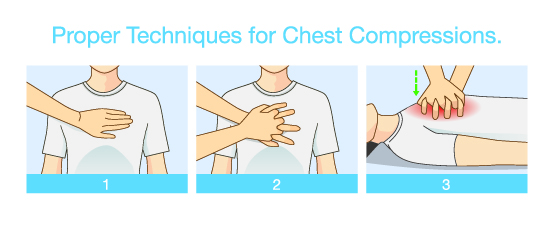
How To Perform High Quality Chest Compressions Cpr First Aid For Free

Cpr In Adults Positioning Your Hands For Chest Compressions

Cpr Hand Placement Positioning Your Hands For Chest Compressions Procpr

Part 4 Adult Basic Life Support Circulation


Comments
Post a Comment